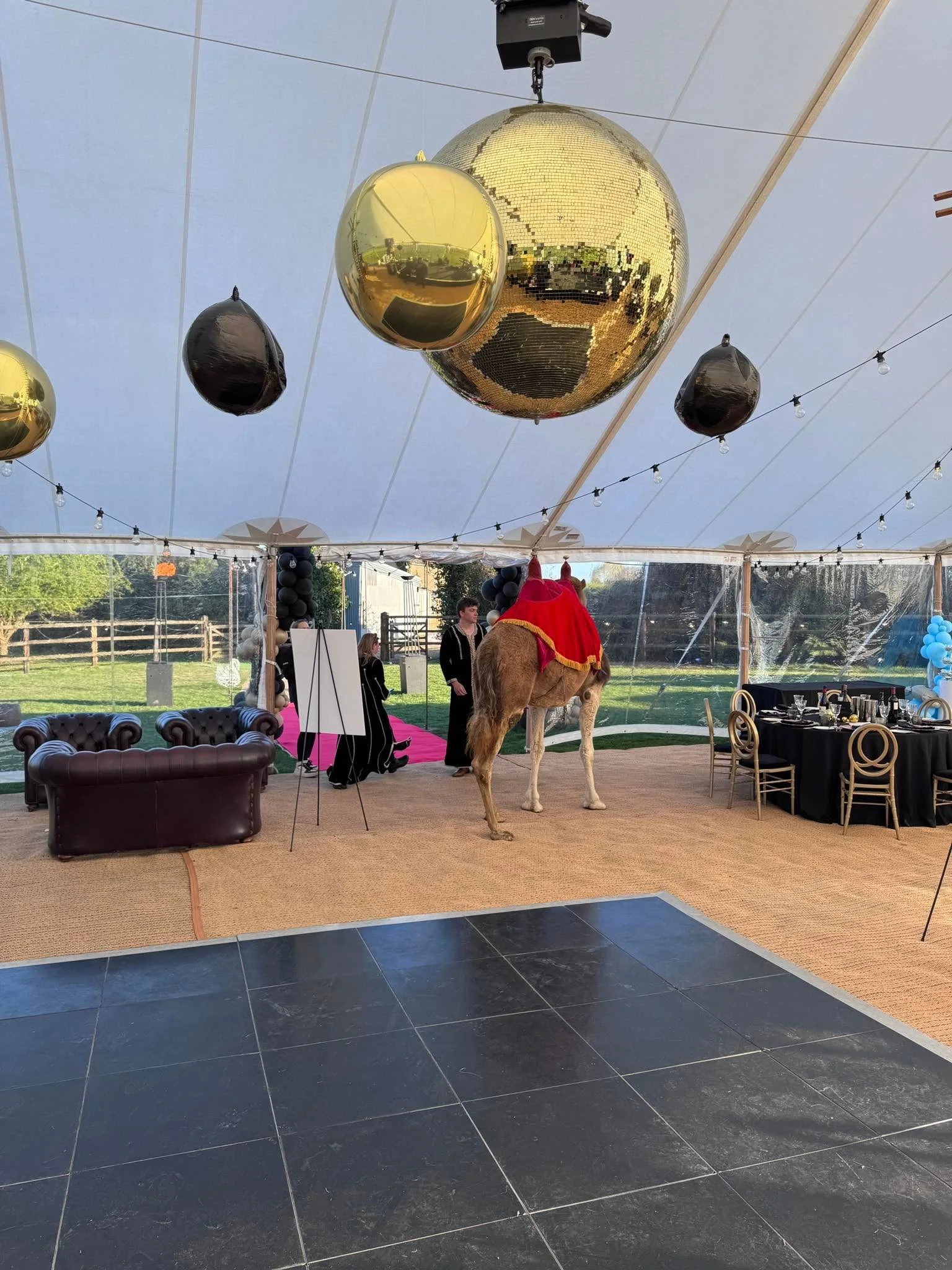
One client wanted a camel. As you can see, the brief had a hump in it. Most wedding plans start with sound, lighting and a dance floor, but there is always room for a question nobody saw coming. Whether your wish list includes a camel or simply great speeches and a packed dance floor, these five questions help turn it into a practical plan.
The key idea
Ask for a clear scope, a workable schedule and one named person who owns the production plan.
01 / What is included in your proposal?
Ask the team to explain the quote in terms of the experience it provides. Which spaces are covered? Does sound include the ceremony and speeches, or only the evening entertainment? Does lighting cover the entrance and outdoor routes as well as the room?
Clarify equipment, crew, delivery, setup, operation and collection, along with VAT and any additional charges. Find out what depends on another supplier. You should be able to describe what you are buying without having to translate a list of product names.
02 / What do you need to know about our venue?
Ask whether a site visit is needed and who will speak to the venue. Access, loading, available power, performance space and sound restrictions can all shape the plan. A marquee or outdoor celebration will raise different questions from an established function room.
Share the venue contact and any information you already have. Ask which assumptions remain in the proposal and when they will be confirmed. Identifying a constraint early gives you time to choose a sensible solution.
03 / How will you work with our other suppliers?
Your band, DJ, planner, photographer and venue team may all need something from the production setup. Ask who gathers their requirements and checks that they agree with the plan.
For example, the band may bring its own sound system while the speeches need separate microphones. A photographer may need to know when the lighting changes for the first dance. Clear handovers help avoid duplicated equipment and gaps in responsibility.
04 / What happens if the plan needs to change?
Ask how the team approaches weather changes, equipment problems and a timetable that slips. The answer should relate to your event: which areas are exposed, which moments depend on particular equipment and how decisions will be communicated.
Clarify who will be present during the celebration and what support is included. If something changes, you should know who can act on it and who will speak to the venue or planner. A useful contingency plan is specific enough to guide a decision.
05 / Who is our contact, and what happens next?
Ask for a named contact and the milestones between booking and the wedding. When do you confirm the layout? When are supplier requirements due? When is the final production schedule shared?
Agree setup and collection windows, including any venue access limits. Ask how late changes are handled and when they might affect the cost. Once the details are agreed, get the scope and timings in writing so everyone works from the same plan.
Bring the vision as well as the questions
You do not need to arrive with a technical specification. Bring your date, venue, approximate guest numbers and a few references for the atmosphere you want. Explain which moments matter most to you. If one of those moments involves a camel, please mention it before we finalise the floor plan.
A helpful production team will turn those priorities into a coordinated plan and explain the choices in plain language. That leaves you free to focus on the celebration.
Put the ideas into practice
Let’s make your occasion happen.
Tell us about your venue, your date and the moments that matter. We’ll help shape the production around them.
Plan your event